

Why I Changed Direction on This Substack
From marketing expertise to anti-doomscrolling, attention, and a quieter life

If you’ve been following this Substack for a while, this might feel unexpected.
Until recently, this space was about marketing. Strategy, thinking, systems. The kind of content I’ve been immersed in for years professionally, intellectually, daily. That direction wasn’t wrong. It reflected a version of me that was deeply engaged, motivated, and genuinely excited about teaching and explaining how things work.
But at some point, it stopped feeling true.
This post is my attempt to explain why I chose to archive everything, change direction, and start again – honestly, without rebranding it as “growth” or “pivot” or any other polished word.
When you’re surrounded by marketing all day, every day
Marketing is not a side interest for me. It’s my profession. I run businesses built on it, I teach it, I speak about it daily. My working life revolves around platforms, content, visibility, attention, and performance.
That means I spend most of my days inside the logic of the internet.
And while I still respect the field deeply, I’ve reached a point where I no longer feel I can add something meaningful to the marketing conversations already happening on Substack. There are brilliant writers here. Thoughtful analysts. Experienced practitioners. Anything I would write would feel like repetition. Not because I lack the knowledge, but because I lack the inner pull to repeat it again.
Maybe that’s boredom, maybe it’s saturation… or maybe it’s the early signal of burnout… I don’t have a neat label for it yet.
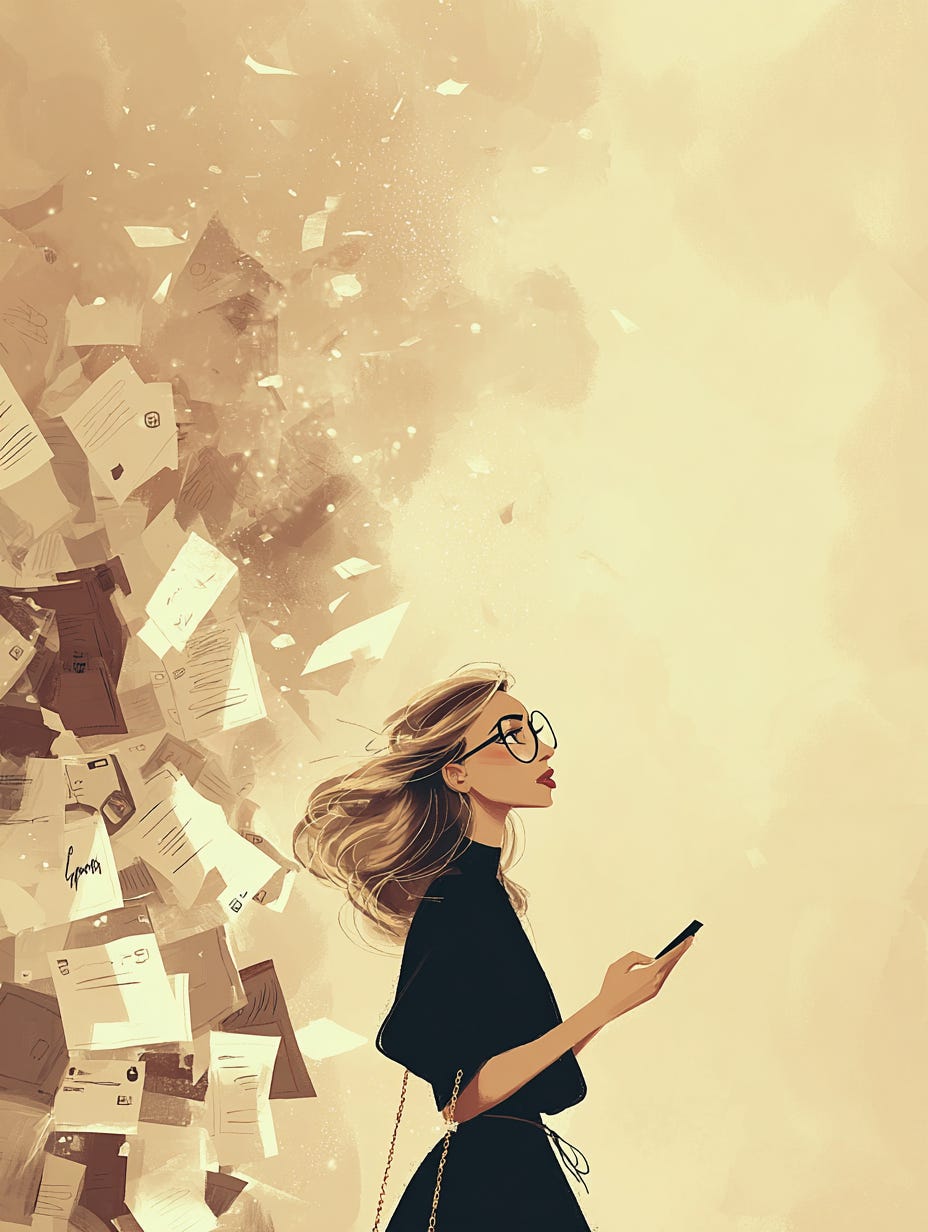
The quiet fatigue no one warns you about
What I have noticed is this: my attention started to feel tired.
Not dramatically. Not in a way that forced me to stop working. But subtly enough to change my mood, my patience, and my inner climate. I found myself scrolling without intention, browsing without desire, filling empty moments simply because they were empty.
Sometimes it was social media.
Sometimes it was endless online shopping tabs.
Sometimes it was just the reflex to reach for my phone whenever silence appeared.
None of this looked alarming from the outside, but over time, it flattened something inside me. And once I noticed it, I couldn’t unsee it.
The paradox of having “everything” and still feeling off
This part is uncomfortable to write, and maybe uncomfortable to read.
Objectively, my life is good. I run successful businesses. I’m in a loving marriage. We live in a beautiful home. I don’t carry financial or existential fear on a daily basis.
And yet, there are moments when I feel unhappy. Restless. Disconnected.
There’s also one deeply personal absence in my life: despite our desire, becoming parents hasn’t worked out so far, not by choice. I mention this not for sympathy, but because it quietly reshapes how I think about time, health, and the kind of life I want to live long-term.
This combination — stability paired with emotional unease — forced me to stop asking what else should I build? and start asking how do I actually want to live?
Why anti-doomscrolling became personal
Working in marketing means constant exposure to digital environments. My phone isn’t just entertainment; it’s infrastructure. Social platforms aren’t distractions; they’re tools. But tools shape us, whether we admit it or not.
I started noticing how these environments affected my nervous system. How constant stimulation made stillness feel uncomfortable. How “just checking something quickly” slowly became a way to avoid being present with myself.
That’s when the idea of anti-doomscrolling stopped being theoretical and became personal. Not as a rebellion against technology, but as a practice of awareness.
Choosing presence over optimization
I don’t believe in extreme digital detoxes or dramatic lifestyle overhauls. I don’t want another system to follow or another habit to perfect. Instead, I experiment gently.
When I notice myself reaching for my phone out of restlessness, I try something else. Analog hobbies. Journaling that’s visual and messy. Cutting, pasting, drawing, writing without purpose. Moving my body without tracking outcomes. Letting things be imperfect and unfinished.
These choices don’t fix my life, but they definitely soften it. They bring me back into my body, my senses, my present moment, which feels increasingly radical in a digitally toxic modern world.
What this Substack is now and what it isn’t
The Anti-Doomscroll is no longer a marketing publication. It’s not an educational platform. It’s not a place for frameworks, tips, or expert positioning.
It’s a personal space for reflection.
Here, I intend to write about:
attention and digital overload
stress and emotional saturation
the impact of constant online presence
gentle, human attempts to live more intentionally
I don’t write on a strict schedule. I publish when something feels real enough to share. This is slow writing for a fast world.
Who this space is for
This Substack is for people who live much of their lives online — creatives, entrepreneurs, thinkers — and feel quietly affected by it. For those who are “doing well” but still feel tired in ways that success doesn’t solve.
It’s not for people looking for quick fixes, productivity hacks, or optimized routines. There are better places for that. This is for noticing, questioning and choosing differently when possible.
A final note to those who were here before
If you followed this Substack for marketing content, it’s okay to leave. Truly.
And if you stay, know that you’re welcome to read quietly, without engagement or obligation. This space isn’t here to demand attention. It’s here to protect it.
I’m trying to build a calmer, healthier life inside a noisy digital world, and this Substack is part of that experiment.
If that resonates, I’m glad you’re here! 🤍
Good luck in the new venture Eniko. I once wrote a guest piece related to doomscrolling if ever interested to check out.
🥂 to your pivot! I'm such a fan of realizing when our direction is draining us instead of feeding us. I struggled a bunch to find my stride on Substack and pivoted several times, and I am always so happy when I see people being transparent about pivoting, because people often are afraid to do it. Great job, love it!